
It is easy to become lost when embarking on a fertility journey. A good number of couples go online and read both good and bad things and they are more stressed than enlightened. This is the reason why the actual distinction between iui and ivf is worth knowing prior to making a choice. An effective plan is one that will save time, money, and emotional energy.
The patients start their journey after visiting an ayurvedic infertility doctor in Delhi who examines lifestyle, hormonal health, and reproductive history. A middle-ground between contemporary fertility care and wellness-promoting practices is usually the way to go.
There are differences between iui vs ivf, success factors, risks, costs, and the time when doctors recommend each of them in 2026, which you will learn in this guide. All this is based on the recommendation of reputable medical agencies like the World Health Organization (WHO), Indian Council of Medical Research (ICMR) and the American Society for Reproductive Medicine (ASRM).
We will take it step by step.
What Is IUI? A Simple and Less Invasive Fertility Treatment
The abbreviation of IUI is Intrauterine Insulin. It is among the first-line fertility treatments that are widely recommended.
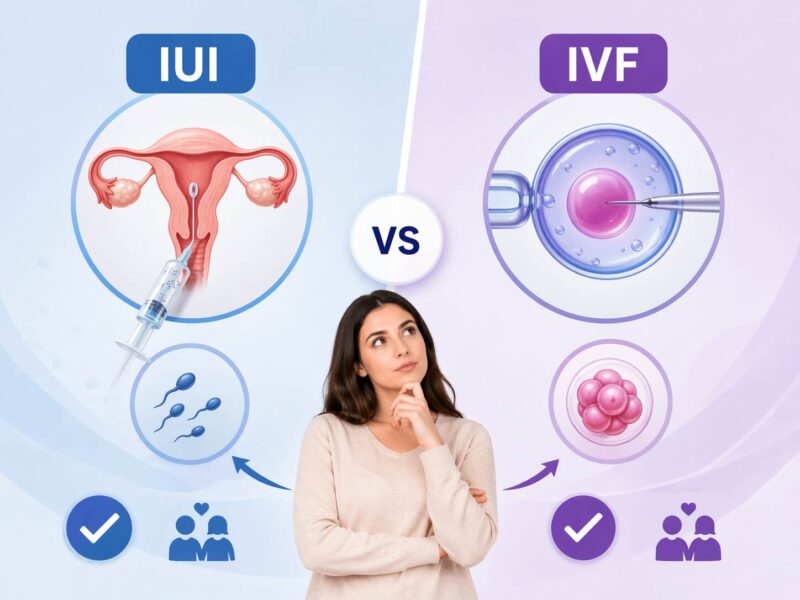
In IUI, the doctor will directly inject ready sperm into the uterus during the ovulation period. This procedure enhances likelihood of fertilization as it minimizes the distance sperm has to cover.
It typically takes a few minutes. The majority of patients resume normal functioning the same day.
Doctors often recommend IUI for:
- Mild male infertility
- Irregular ovulation
- Unexplained infertility
- Cervical mucus issues
- Early-stage fertility challenges
To add hormone balance, digestion, and stress management in the treatment process, many couples are incorporating medical care with ayurvedic female infertility treatment in Delhi.
What Is IVF? A More Advanced Fertility Solution
IVF is an abbreviation that means In Vitro Fertilization. It is a more developed assisted reproductive technique.
In IVF, the doctors harvest eggs in the ovaries and fertilize them using sperm in a laboratory. Once fertilized, the embryo is transferred by the doctor into the uterus.
This procedure puts physicians in a better position to control fertilization and embryo formation.
IVF is normally recommended by doctors when:
- Fallopian tubes blocked.
- There is serious male infertility.
- There is a decline in fertility due to age.
- Endometriosis affects fertility
- Past IUI cycles were unsuccessful.
The Centers of Disease Control and Prevention (CDC) and HFEA (UK) state that IVF is still among the most effective methods of fertility therapies in the world, particularly complex cases.
Also Read : IVF Success Rates by Age: What to Expect in 2026
Difference Between IUI and IVF: Key Factors to Understand
The ivf and iui difference can be understood better as you compare practical aspects and not the technical definitions.
1. Procedure Complexity
IUI is easy and least invasive. It is done in an outpatient environment by doctors.
IVF is a process that requires a series of procedures and these procedures include hormone injections, egg retrieval, laboratory fertilization and embryo transfer.
2. Time Commitment
IUI involves less clinic visits.
IVF requires additional follow-ups and planning.
3. Cost Difference
The ivf vs iui decision is often affected by cost.
Generally:
- IUI is less expensive per cycle.
- IVF is more expensive but has high chances of success in some instances.
Before commencing the treatment, doctors always suggest that one should discuss financial planning.
IUI vs IVF Success Rate: What Real Medical Data Shows
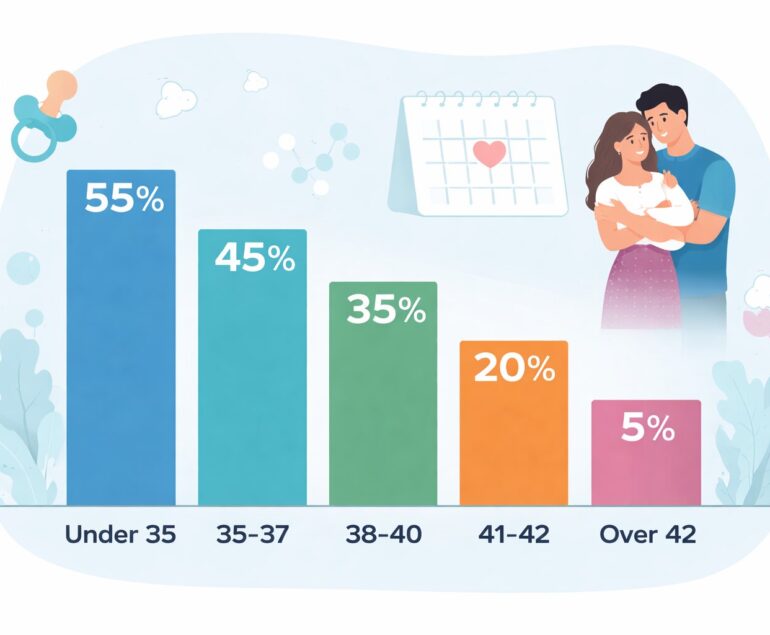
There are varying iui vs ivf success rates. The outcomes are influenced by age, fertility diagnosis, and general health.
According to the reports by trusted organizations like the ICMR, ASRM and NIH (National Institutes of Health) it is always stated that:
- IUI has a good response in younger patients.
- IVF offers an increased success rate in complicated cases.
- Lifestyle factors are very important in determining fertility.
There is no moral physician who can ensure pregnancy. Fertility therapy is based on probabilities, rather than promises.
Most patients have a better chance of getting better when they settle the lifestyle factors with the help of an ayurvedic infertility doctor in Delhi, who specializes in nutrition, stress management, and hormonal balance.
When Do Doctors Recommend IUI First?
Physicians tend to adopt a progressive course of treatment. Ayu Fertility begins with simple alternatives and proceeds to the more complex ones.
You might be a good candidate of IUI when:
- You are under 35
- Your fallopian tubes are patent
- Sperm quality is slightly reduced
- You are infertile without any reasons
- This is your first fertility treatment
The majority of fertility experts suggest 3-4 rounds of IUI, then IVF should be considered.
The same patients with ayurvedic female infertility treatment in Delhi tend to work on better egg quality, reproductive menstrual cycles and reproductive health during these cycles.
When Is IVF the Better Choice?
It is more reasonable not to use IUI sometimes. Medical history is examined by the doctors to determine treatment.
IVF will be the more appropriate choice in case:
- The fallopian tubes are both obstructed
- There is severe male infertility
- Over 35 years with low ovarian reserve
- Genetic testing is needed
- Past fertility therapies were unsuccessful
This is the stage when most couples visit a lot of research about the clinics before they treat. Verified patient reviews and clinic information can be reviewed on the Google Business profile of Ayu Fertility that will assist patients in finding services and reading about treatment information prior to booking consultations.
Risks and Safety: What You Should Know Before Starting Treatment
Both procedures are deemed safe when under the hands of qualified professionals. Nevertheless, it is possible to know the possible risks and make the decision.
IUI Risks
- Mild cramping
- Minor infection risk
- Minor risk of multiple pregnancy.
IVF Risks
- Ovarian hyperstimulation syndrome (infrequent)
- Multiple pregnancy risk
- Stresses emotional and physical.
Modern clinics of fertility adhere to safety rules. The rise in medical technology has greatly minimized complications in the last ten years.
Lifestyle Habits That Can Improve Fertility Outcomes
Fertility is greatly influenced by lifestyle. The benefits of adopting healthy habits in patients are realized by doctors who see improved treatment outcomes when patients take healthy habits early.
Pay attention to the following routines:
- Have a normal body weight
- Consume nutritious, balanced meals
- Exercise regularly
- Sleep 7-8 hours per day
- Reduce stress levels
- Do not smoke or drink alcohol
The studies conducted by the National Institutes of Health (NIH) indicate that lifestyle influences both male and female reproductive health directly.
Most of the couples favor such practices with the help of ayurvedic treatment of female infertility in Delhi, which focuses on digestion, detoxification and hormonal balance.
Emotional Readiness Matters More Than You Think
Treatment of fertility is not just a medical procedure. It also impacts on feelings, relationships, and mental health.
Ask yourself:
- Do I have an emotional readiness to undergo several treatment cycles?
- Is there a support system?
- Am I able to cope with stress in treatment?
- Am I aware of the financial investment?
When fertility is undergoing treatment, doctors usually recommend that a person undergo counseling or support groups. Emotional resilience enhances decision making and adherence to treatment.
IUI vs IVF in 2026: New Trends in Fertility Care
Fertility medicine is still rapidly developing. Smarter technologies and more personalized treatment plans are now used in the clinics.
The trends of 2026 are:
- Better embryo selection procedures.
- Better fertility medications
- Personalized hormone monitoring
- Greater psychological assistance.
- Incorporation of holistic therapies.
Such changes assist physicians to make better decisions on treatment in the iui vs ivf journey.
Final Thoughts: Choosing the Right Fertility Treatment
No single solution exists in the iui vs ivf debate. All fertility journeys are different.
The appropriate treatment is determined by:
- Age
- Medical condition
- Fertility history
- Financial readiness
- Emotional comfort
An experienced fertility expert may review your case and develop a unique plan. Guidance is always good, especially when you are making important decisions about your reproductive health.
And keep in mind fertility treatment is not a competition, but a process. The most advanced technology requires time, regularity, and appropriate medical assistance to work. If you need personalized advice or want to discuss your fertility concerns, you can contact the specialists at Ayu Fertility for professional guidance and support tailored to your situation.