
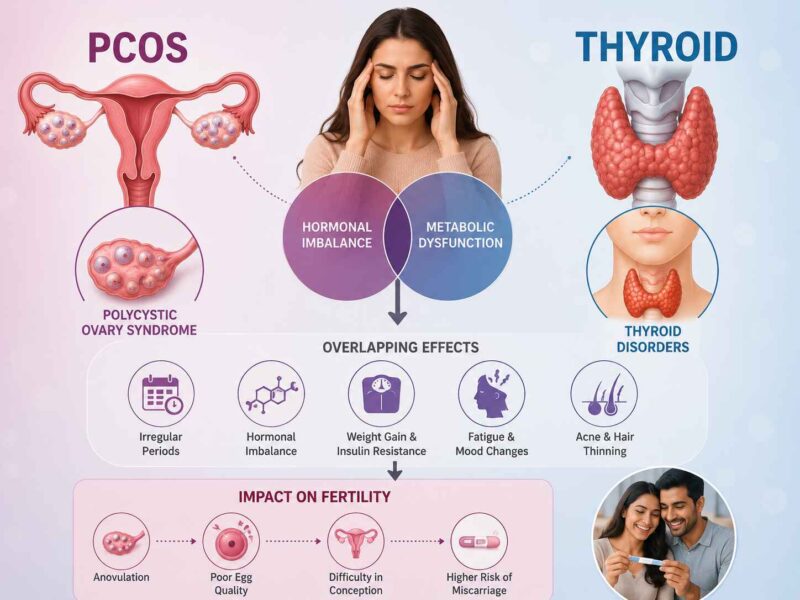
Hormones love teamwork. Unfortunately, when one hormone is out of whack, so are the others! It’s the same with PCOS and Thyroid disorders. It is quite common for women to experience irregular periods, weight gain, acne, mood swings or fertility problems and fail to recognise that there can be a relationship between the two.
Doctors actually find that women with PCOS have indications of thyroid balance as well. This mix can make it more difficult to conceive, impact the ovulation cycle and raise emotional stress. The good news? Reproductive health can be greatly enhanced through early diagnosis, lifestyle changes and sound medical management. Many women also explore holistic care through an ayurvedic doctor for pcos to support hormonal balance naturally alongside medical treatment.
Let’s look at how these conditions are related and what the signs are to look out for, and how fertility can be enhanced with the right approach.
What Is PCOS?
Polycystic Ovary Syndrome is a hormonal condition that affects women during reproductive age. According to the World Health Organization, PCOS affects millions of women globally and remains one of the leading causes of infertility.
Women with PCOS often experience:
- Irregular or missed periods
- Excess facial or body hair
- Acne and oily skin
- Weight gain
- Difficulty getting pregnant
- Insulin resistance
PCOS affects ovulation. When ovulation becomes irregular, fertility naturally drops. Some women release eggs inconsistently, while others stop ovulating altogether.
Also Read : Best Foods to Increase Fertility Naturally in 2026
Understanding Thyroid Disorders
The thyroid is this small butterfly shaped gland right there in your neck, but it somehow steers a lot of key processes. Thyroid hormones, in a way, keep metabolism ticking along, affect energy levels and even influence menstrual cycles as well as reproductive health.
The two major thyroid conditions include:
Hypothyroidism
Hypothyroidism happens when the thyroid gland produces too little hormone. This condition slows down body functions.
Common symptoms include:
- Fatigue
- Weight gain
- Hair thinning
- Depression
- Heavy periods
- Fertility problems
Hyperthyroidism
Hyperthyroidism occurs when the gland becomes overactive and produces excess hormones.
Symptoms may include:
- Anxiety
- Rapid heartbeat
- Weight loss
- Irregular periods
- Trouble sleeping
Both conditions can disrupt reproductive hormones and affect ovulation.
How PCOS and Thyroid Conditions Overlap
Researchers keep looking into the connection between PCOS and thyroid disorders, like it’s a never-ending story. A number of studies indicate that women with PCOS are at an increased likelihood of thyroid dysfunction, and in particular, hypothyroidism.
The overlap seems to appear because both conditions sit right in the endocrine system. Hormones constantly communicate around inside the body. When one pathway has trouble, the other systems often respond, even if they don’t look connected at first.
Shared Hormonal Pathways
Both PCOS and thyroid disorders involve:
- Hormonal imbalance
- Insulin resistance
- Metabolic issues
- Menstrual irregularities
- Ovulation problems
This is why many women search for information about pcos and thyroid issues together rather than separately.
A review published in the National Library of Medicine explains that thyroid dysfunction may worsen metabolic and reproductive complications in women with PCOS.
PCOS and Thyroid Symptoms You Should Not Ignore
Sometimes symptoms overlap so closely that diagnosis becomes confusing. A woman may think she only has PCOS while an undiagnosed thyroid issue continues silently in the background.
Here are common pcos and thyroid symptoms:
- Irregular periods
- Sudden weight changes
- Difficulty conceiving
- Fatigue and low energy
- Mood swings
- Hair fall
- Acne
- Increased stress levels
Many women ignore these signs because modern life already feels exhausting. But when hormones stay unbalanced for long periods, fertility may suffer.
How These Conditions Affect Fertility
Fertility depends heavily on regular ovulation and balanced hormone levels. Both PCOS and thyroid disorders interfere with this process.
1. Irregular Ovulation
PCOS disrupts egg release. Thyroid imbalance can also disturb the menstrual cycle. Together, they create inconsistent ovulation patterns.
2. Poor Egg Quality
Hormonal imbalance may affect egg development and reproductive health over time.
3. Increased Miscarriage Risk
Some studies show untreated hypothyroidism may increase miscarriage risk during early pregnancy.
4. Insulin Resistance
Many women with PCOS also experience insulin resistance, which affects hormone regulation and weight management.
5. Stress and Mental Health
Hormonal conditions affect emotional wellbeing too. Constant fatigue, anxiety, and fertility struggles can create chronic stress. Ironically, stress itself can worsen hormone imbalance. The body truly enjoys drama.
Diagnosis Matters More Than Guesswork
Google searches help, but hormone testing matters more.
Doctors usually recommend:
- Thyroid function tests
- Ultrasound scans
- Blood sugar testing
- Hormonal profile checks
- Ovulation tracking
Specialists in Endocrinology and Gynecology often work together to evaluate reproductive health properly.
Some patients also combine modern care with support from an ayurvedic doctor for pcos to improve lifestyle habits, stress management, and diet routines naturally.
Best Diet Tips for PCOS and Thyroid Health
Food cannot magically cure hormonal disorders. Still, nutrition plays a major role in symptom management.
A balanced pcos and thyroid diet chart usually includes:
Foods That Help
- High-fiber vegetables
- Whole grains
- Healthy fats
- Lean protein
- Nuts and seeds
- Fresh fruits in moderation
Foods to Avoid With PCOS and Thyroid
Many experts recommend limiting:
- Refined sugar
- Processed foods
- Sugary drinks
- Excess fried food
- Ultra-processed snacks
Women researching foods to avoid with pcos and thyroid should focus on reducing inflammation and stabilizing blood sugar levels rather than following extreme diet trends from social media.
The American Thyroid Association and Mayo Clinic both emphasize balanced nutrition and consistent medical care for hormonal health.
Can Ayurveda Support Hormonal Balance?
Many women try complementary wellness practices while still staying with standard treatment. Clinics like Ayu Fertility often focus on lifestyle correction, stress handling, and a more natural wellness type support. It can feel a bit less rigid, you know.
Some women also check in with an ayurvedic doctor for male infertility, because fertility difficulties don’t only land on women alone. Reproductive health, in reality, depends on both partners, not one.
Ayurveda may support:
- Stress reduction
- Better digestion
- Sleep improvement
- Lifestyle discipline
- Overall hormonal wellness
However, thyroid disorders and PCOS still require proper diagnosis and medical supervision. Natural support works best when combined with evidence-based care.
Lifestyle Changes That Actually Help
Complicated wellness routines usually fail after three days. Simple habits work better.
Focus on These Basics
- Exercise regularly
- Sleep 7–8 hours
- Reduce stress levels
- Maintain healthy body weight
- Avoid smoking
- Limit alcohol intake
Even moderate physical activity helps with insulin sensitivity and it also helps sort out hormone regulation, a bit. Women tend to have better fertility outcomes when they put medical care together with sensible daily habits and some support from professionals, including an ayurvedic doctor for pcos, if they want that kind of integrated wellness plan.
Final Thoughts
The link between PCOS and Thyroid dysfunctions is true, frequent and frequently misunderstood. Both have an impact on hormones, metabolism, periods and fertility. Delaying treatment can lead to more complications and delay diagnosis.
The good news is that many women can heal and heal their reproductive health through early diagnosis, a balanced diet, exercise, stress management and medical assistance. Moreover, clinics such as Ayu Fertility provide attention to holistic fertility wellness and lifestyle changes for improved hormonal balance.
Sometimes hormones do get a bit unpredictable, but when they are well cared for, they can react in a remarkably predictable manner. The little things do add up! If you do have any hormonal imbalance or fertility issues, reach out to us today and we’ll guide and support you accordingly.