Hormonal health issues are no longer rare conversations among women. PCOD and PCOS often come up during doctor visits, online searches, and late-night worry sessions. While people use these terms interchangeably, they do not mean the same thing. Understanding PCOD vs PCOS helps women take control of their health before small symptoms turn into long-term problems.
Many women exploring natural care options also look for an ayurvedic doctor for PCOS, ayurvedic female infertility treatment in Delhi, or even an ayurvedic doctor online consultation to manage symptoms safely. Let’s clear the confusion and explain the real difference between PCOD and PCOS in a simple, honest way.
What Is PCOD?
Polycystic Ovarian Disease, commonly called PCOD, occurs when the ovaries release immature or partially mature eggs. These eggs later develop into cysts. This process affects hormone balance and ovulation but usually does not stop it completely.
PCOD is very common, especially among young women. Doctors often see it linked with lifestyle factors like irregular eating habits, limited physical activity, and high stress. Many women with PCOD continue to ovulate and can conceive naturally after lifestyle changes.
PCOD symptoms often improve when women focus on balanced nutrition, regular exercise, and stress control. That is why early diagnosis makes a big difference.
What Is PCOS?
Polycystic Ovary Syndrome, or PCOS, is a more complex hormonal and metabolic condition. It affects how the ovaries function and how the body processes insulin. In PCOS, ovulation may stop or happen very rarely.
Women with PCOS often have higher levels of androgens, also known as male hormones. This imbalance can cause missed periods, acne, unwanted hair growth, and difficulty getting pregnant. PCOS also increases the risk of long-term health issues such as diabetes and heart disease.
Unlike PCOD, PCOS usually needs long-term management rather than short-term lifestyle correction.
Difference Between PCOD and PCOS Explained Clearly
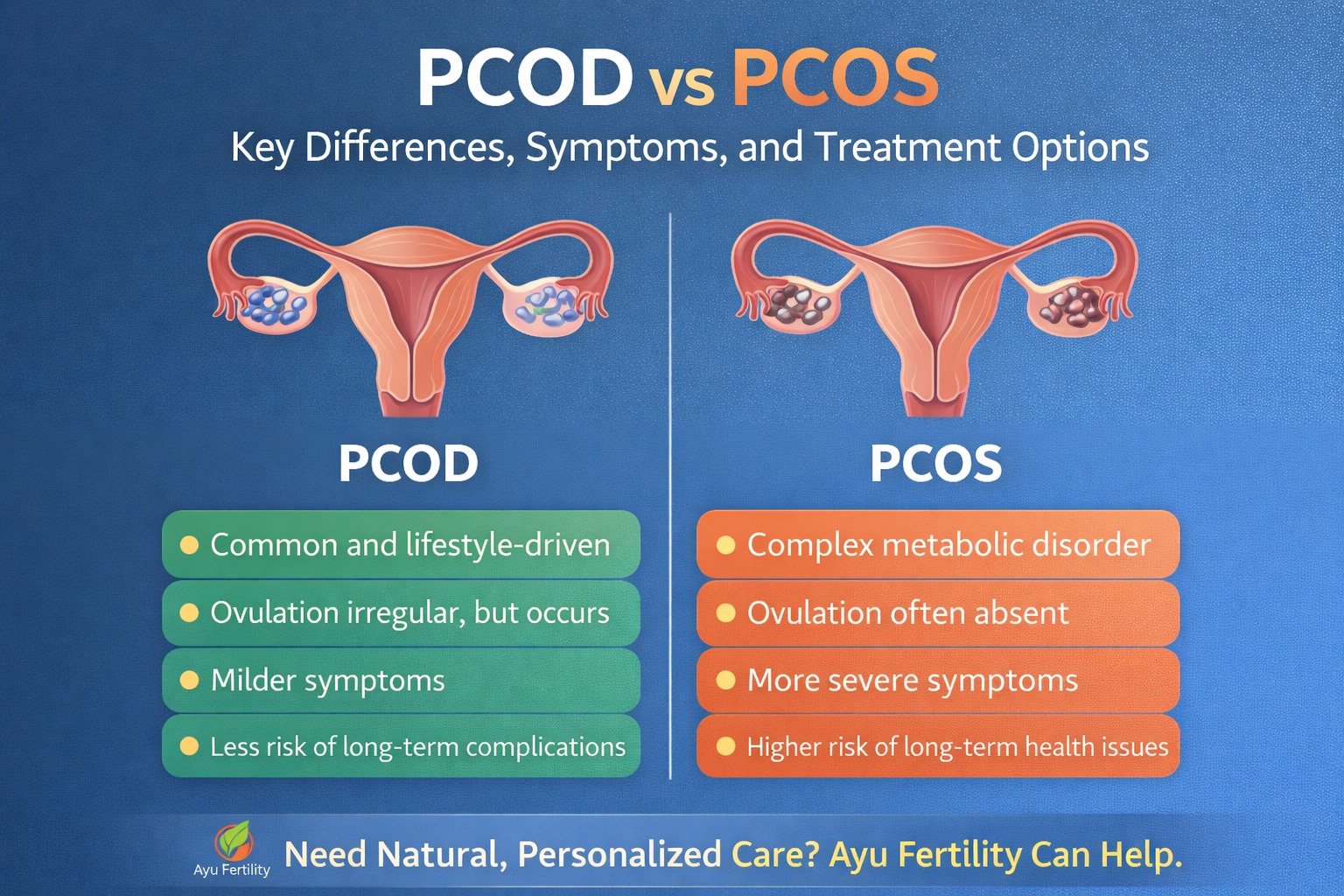
The difference between PCOD and PCOS lies mainly in severity and health impact.
PCOD tends to be milder and more lifestyle-driven. PCOS involves deeper hormonal and metabolic disruptions. Women with PCOD usually respond faster to diet and activity changes. Women with PCOS often need continuous monitoring and an Ayurvedic doctor for PCOD medical support.
Understanding this difference helps reduce fear and avoids unnecessary panic after diagnosis.
PCOD vs PCOS Symptoms: How They Differ
PCOD Symptoms
PCOD symptoms often appear gradually and stay manageable with care. Common signs include irregular periods, mild acne, occasional weight changes, and ovarian cysts visible on ultrasound. Hair thinning or excess facial hair may occur but usually remains mild.
PCOS Symptoms
PCOS symptoms tend to be stronger and harder to ignore. These include missed periods, severe acne, noticeable hair growth on the face or body, scalp hair thinning, abdominal weight gain, and fertility challenges. Many women also experience fatigue due to insulin resistance.
Recognizing these differences early allows timely treatment.
Causes Behind PCOD and PCOS
PCOD Causes
PCOD usually develops due to hormonal imbalance influenced by lifestyle habits. Diets high in processed foods, lack of physical activity, poor sleep, and stress play major roles. Genetics may increase risk, but lifestyle remains the key trigger.
PCOS Causes
PCOS has stronger links to insulin resistance and genetic factors. When insulin levels rise, the ovaries produce more androgens, which disrupt ovulation. Excess body fat worsens this hormonal cycle, making symptoms more severe.
Both conditions need a holistic approach, but PCOS requires deeper medical attention.
How Doctors Diagnose PCOD and PCOS
Doctors diagnose PCOD or PCOS using a combination of medical history, physical examination, blood tests, and ultrasound scans. They assess menstrual patterns, weight changes, acne, hair growth, and hormone levels.
Blood tests measure hormones like testosterone, LH, FSH, and insulin. Ultrasound helps identify cyst patterns and ovarian size. Accurate diagnosis ensures correct treatment and prevents unnecessary medication.
PCOD vs PCOS Treatment Options
Lifestyle Changes
Lifestyle improvement forms the foundation of treatment for both conditions. Regular exercise improves insulin sensitivity. Balanced meals stabilize hormones. Stress-relief practices such as yoga and meditation help regulate cortisol levels.
Even a small weight reduction can restore menstrual regularity and improve symptoms.
Medical Treatment
Doctors may prescribe hormonal pills to regulate cycles, anti-androgen medicines for acne and hair growth, or insulin-sensitizing drugs when needed. Fertility treatments help women trying to conceive.
Some women also explore ayurvedic infertility doctor in Delhi options or prefer natural therapies under professional guidance.
Role of Ayurveda in Managing PCOD and PCOS
Ayurveda focuses on balancing hormones naturally through diet, herbs, detox therapies, and lifestyle correction. Women often consult an ayurvedic doctor for PCOS or opt for an ayurvedic doctor online consultation for long-term symptom management.
Ayurvedic approaches aim to improve digestion, reduce insulin resistance, and restore hormonal balance without aggressive intervention. Many women combine Ayurveda with modern medicine for better outcomes.
PCOD vs PCOS: Which Is More Serious?
PCOS is generally more serious due to its metabolic impact and long-term health risks. PCOD, while uncomfortable, remains easier to control with consistent lifestyle care. Both conditions are manageable when diagnosed early and treated properly.
The key is not to self-diagnose or delay treatment.
Final Thoughts: Choosing the Right Path to Hormonal Balance
Understanding PCOD vs PCOS empowers women to take control of their reproductive and overall health. While both conditions affect ovarian function, the difference between PCOD and PCOS lies in severity, causes, and long-term risks. The good news is that both conditions are manageable with timely diagnosis and the right treatment approach.
If you are looking for natural, root-cause-focused care, Ayu Fertility offers personalized Ayurvedic solutions for hormonal imbalance, fertility concerns, and women’s health. Their experienced team combines traditional wisdom with modern understanding to help you restore balance safely and effectively. Book a consultation with Ayu Fertility today and take the first confident step toward better hormonal health and fertility.