

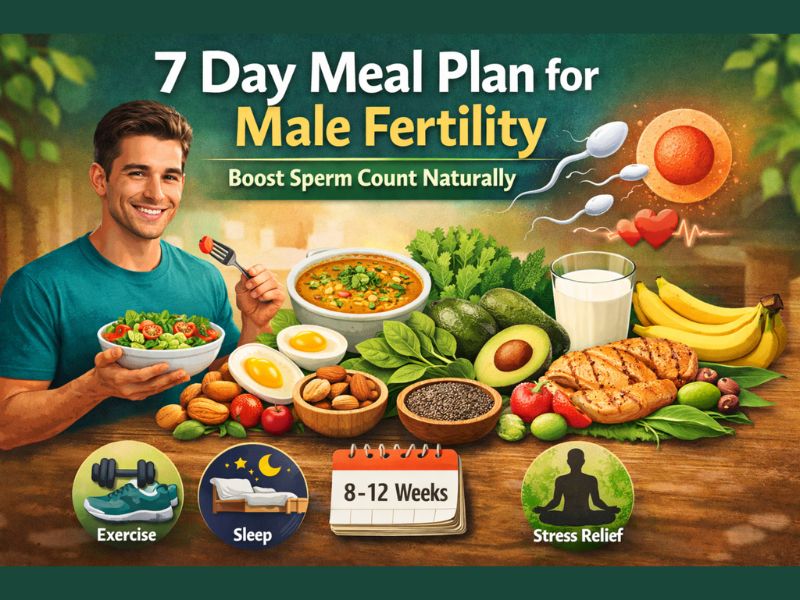
Male fertility is influenced by multiple factors, including genetics, lifestyle, and diet. While medical evaluation is essential for couples struggling to conceive, a structured male fertility diet can significantly support sperm count, motility, and overall reproductive health. This article presents a practical 7 Day Meal Plan for Male Fertility, complete with portion guidance, vegetarian and non-vegetarian options, a grocery list, and a timeline for results, designed to naturally enhance male fertility.
At Ayu Fertility, under the guidance of Dr. Prashant Jain, our holistic approach combines evidence-based nutrition, lifestyle interventions, and Ayurveda to support male reproductive health.
Understanding Male Fertility and Diet
Sperm health depends on quantity (count), quality (morphology), and motility. Diet plays a crucial role in supporting these parameters by providing:
- Antioxidants (Vitamin C, E, selenium) to protect sperm DNA
- Zinc to support testosterone and sperm production
- Omega-3 fatty acids to improve sperm motility
- Protein and folate for healthy sperm formation
Several studies highlight these effects:
- Antioxidants improve sperm parameters: A 2019 study published in Fertility and Sterility found that antioxidant supplementation enhanced sperm count and motility in men with subfertility.
- Zinc supports testosterone and sperm production: Research in Nutrition Reviews (2018) confirmed that zinc supplementation improved serum testosterone and sperm concentration.
- Omega-3 fatty acids enhance sperm motility: A 2020 clinical study showed that men consuming omega-3-rich diets had significantly higher progressive sperm motility compared to controls.
Incorporating these nutrients through foods to increase sperm count naturally ensures sustainable fertility support alongside medical care.
The 7 Day Meal Plan for Male Fertility
This 7-day meal plan provides practical, nutrient-dense options for men seeking to improve fertility. Both vegetarian and non-vegetarian options are included.
Day 1–3: Foundation for Sperm Health
| Meal | Food Items | Benefits |
| Breakfast | Boiled eggs (2), Banana, Almonds (10) | Protein, vitamin E, antioxidants; supports sperm structure and vitality |
| Lunch | Moong Dal, Brown Rice, Spinach, Grilled Fish or Paneer | Zinc, folate, omega-3; improves sperm quality and count |
| Dinner | Vegetable Soup, Paneer/Chicken with sautéed veggies | Protein, minerals; supports reproductive health |
| Snack | Pumpkin seeds (2 tbsp), Greek yoghurt | Zinc and probiotics; enhances sperm motility |
Day 4–6: Motility and Morphology Boost
| Meal | Food Items | Benefits |
| Breakfast | Oats with walnuts & chia seeds, Orange | Omega-3s, antioxidants; improves morphology and motility |
| Lunch | Masoor Dal, Chapati, Moringa leaves, Grilled Fish/Tofu | Folate, iron, and calcium; supports DNA integrity |
| Dinner | Chicken curry or Paneer curry, Steamed vegetables | Protein, antioxidants, and hormone regulation |
| Snack | Dates (4–5), Almonds | Energy, minerals; enhances sperm vitality |
Day 7: Flexible Fertility Plate
| Meal | Food Items | Benefits |
| Breakfast | Dates & milk, Banana | Iron, natural sugars, potassium; boosts energy and libido |
| Lunch | Hilsa Fish/Ilish Bhapa or Paneer Curry, Spinach, Chapati | Omega-3s, folate, protein; improves sperm quality |
| Dinner | Mixed Salad with Moringa Powder & Seeds | Vitamins A, C, and iron support motility and morphology |
| Snack | Walnuts & Raisins | Antioxidants, omega-3s; supports sperm health |
This plan is designed for daily nutrient variety and flexibility, allowing substitutions based on availability and personal preference.
Portion Size Guidance
Approximate daily portions help ensure nutrient adequacy without overconsumption:
- Protein: 100–150g/day (eggs, fish, chicken, paneer, legumes)
- Fruits: 2–3 servings/day (banana, citrus, berries)
- Vegetables: 3–4 servings/day (leafy greens, carrots, pumpkin)
- Nuts & seeds: 2–3 tbsp/day (walnuts, pumpkin seeds, chia)
- Whole grains: 2–3 servings/day (brown rice, oats, roti)
Sample Weekly Grocery List for Fertility
- Vegetables: Spinach, Moringa leaves, Fenugreek (Methi), Pumpkin, Carrots, Mixed greens
- Fruits: Banana, Orange, Dates, Berries, Mango
- Protein: Eggs, Paneer, Chicken, Fish (Hilsa, Pabda), Legumes (Moong, Masoor)
- Nuts & Seeds: Walnuts, Almonds, Pumpkin seeds, Chia seeds
- Grains: Brown rice, Oats, Chapati, Millet
- Other: Olive oil, Greek yoghurt, Herbs (Kalonji, coriander, turmeric)
Keeping a stocked pantry ensures adherence to the sperm motility improvement diet without stress.
Lifestyle Habits That Complement Fertility Nutrition
Even the best diet is more effective when combined with:
- 7–8 hours of sleep for hormonal balance
- Moderate exercise (yoga, walking, resistance training)
- Stress management via meditation or breathing exercises
- Avoiding alcohol, smoking, and excessive caffeine
- Minimising exposure to plastics and environmental toxins
These habits work synergistically with fertility nutrition for men to enhance sperm count, motility, and hormone regulation.
How Long Does It Take to Improve Sperm Count with Diet?
Sperm production cycles take approximately 70–90 days. Therefore, consistent diet and lifestyle changes are needed for measurable improvements:
- Weeks 1–4: Energy and nutrient correction; initial antioxidant support
- Weeks 4–8: DNA integrity and motility start improving
- Weeks 8–12: Count, morphology, and motility improvements become more pronounced
Patience and adherence are key; this timeline aligns with natural sperm regeneration cycles.
Who Should Follow This Plan?
- Men with mild to moderate low sperm count
- Men preparing for IVF, IUI, or natural conception
- Individuals seeking preventive reproductive care
Who Should Avoid or Modify This Plan
- Men with kidney disease (high protein intake may be harmful)
- Diabetics (limit high-sugar fruits like dates)
- Obese individuals may need calorie-adjusted portions
- Severe male infertility conditions (azoospermia) require medical intervention
Ayurvedic Perspective on Male Fertility
Ayurveda identifies Shukra Dhatu as central to male reproductive health. Supporting this tissue through diet and herbs improves sperm count, motility, and vitality. Common Ayurvedic herbs and foods include:
- Moringa leaves (Sajna Pata)
- Ashwagandha
- Shatavari
- Black cumin (Kalonji)
- Pumpkin seeds (Kumro Bichi)
Dr. Prashant Jain integrates these principles with modern diagnostics, offering ayurvedic male infertility treatment in Delhi and online consultations.
Superfoods to Boost Sperm Health
- Walnuts: Omega-3s; improve morphology & motility
- Pumpkin seeds: Zinc, essential for testosterone and sperm production
- Eggs: Protein & selenium; protects sperm DNA
- Leafy greens: Folate & iron; enhances motility
These superfoods should be consumed daily in moderation as part of a complete male fertility diet.
Summary of Key Recommendations
- Follow the 7-day meal plan consistently
- Include both vegetarian and non-vegetarian options
- Consume antioxidants, zinc, omega-3s, and folate-rich foods
- Maintain healthy lifestyle habits
- Track progress over 8–12 weeks
- Seek medical evaluation if struggling to conceive for 6–12 months
If you have been trying to conceive for 6–12 months without success, consider a gentle fertility evaluation. At Ayu Fertility, Dr. Prashant Jain provides evidence-based guidance combining nutrition, lifestyle, and Ayurveda to support male reproductive health.